
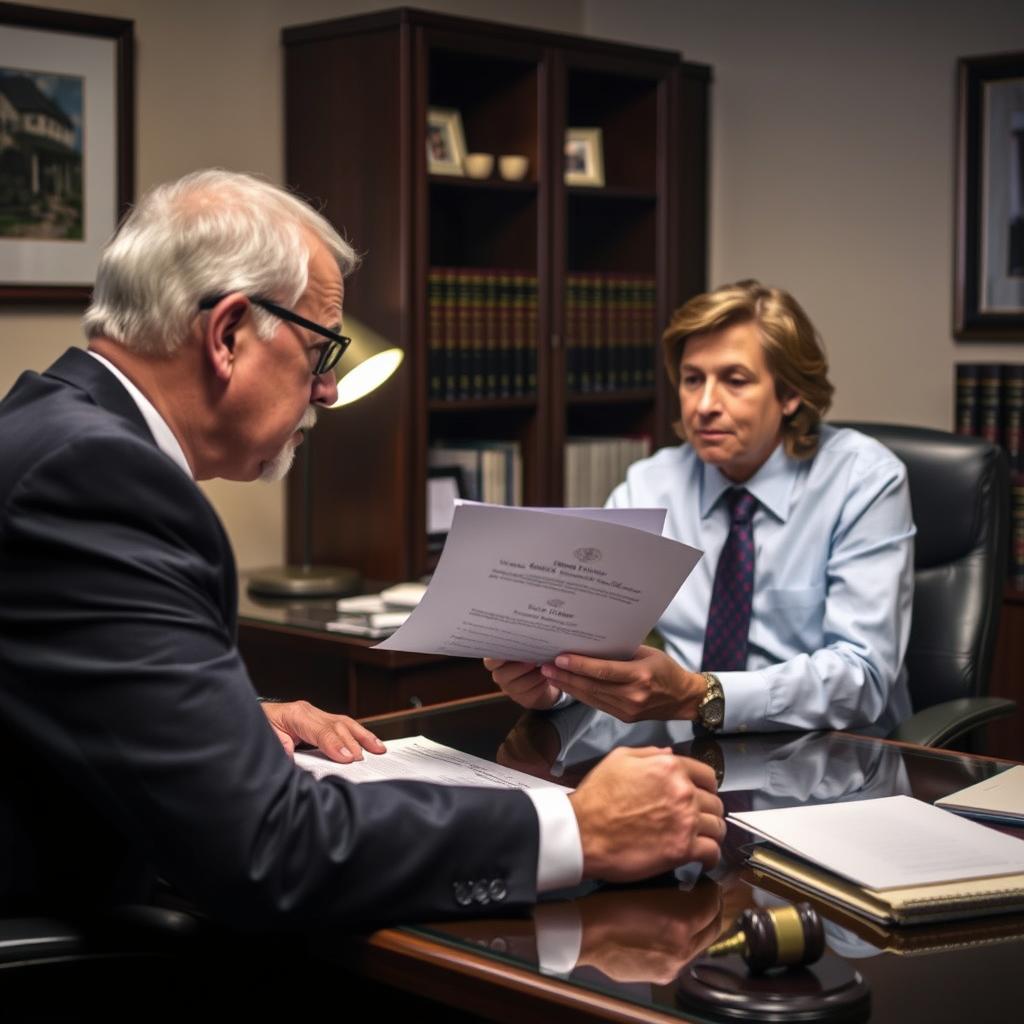
License Revocation Defense Lawyer Fairfax, VA
When your driver’s license is revoked by the Virginia Department of Motor Vehicles or a Fairfax court, you lose your ability to drive legally—and with it your ability to get to work, manage family obligations, and maintain your independence. Law Offices Of SRIS, P.C. Concentrates on defending individuals facing license revocation in Fairfax County, the City of Fairfax, and throughout the Northern Virginia area. Our Fairfax location serves clients who need a lawyer to challenge an administrative revocation, respond to a criminal charge that triggers a revocation, or seek reinstatement after the revocation period ends. Mr. Sris, the firm’s Owner and Founder, is a former prosecutor who understands both the DMV hearing process and the courtroom dynamics at the Fairfax County General District Court and the Fairfax City General District Court. Mr. Sris and the firm’s Of Counsel attorneys work to identify procedural errors, challenge the evidence supporting the revocation, and pursue the most favorable outcome available under Virginia law. For a consultation about your license revocation matter, call (888) 437-7747. Law Offices Of SRIS, P.C. – Advocacy Without Borders.
What License Revocation Defense Means in Fairfax, Virginia
Virginia law grants the Commissioner of the Department of Motor Vehicles the authority to revoke a driver’s license for a broad range of reasons. Under Va. Code § 46.2‑389 and the statutes that follow, a conviction for certain criminal traffic offenses—such as felony reckless driving resulting in death, a third-offense DUI within ten years, or driving on a revoked license—triggers a mandatory revocation. The DMV can also revoke a license administratively for accumulating excessive demerit points or for a medical determination that the driver is no longer fit to operate a motor vehicle. In Fairfax, a driver who receives a revocation notice has a limited window to request an administrative hearing or to challenge the underlying court order that triggered the revocation.
The Fairfax County General District Court, located at 4110 Chain Bridge Road, hears the traffic docket where many revocation-triggering offenses are adjudicated. The Fairfax City General District Court, located at 10455 Armstrong Street, handles similar matters for cases arising within the city limits. At either court, a conviction for a qualifying offense can lead to an immediate license surrender, a DMV entry that makes the revocation effective automatically, and the possibility of additional criminal penalties if the individual is later caught driving while revoked. Because Virginia treats many of these underlying offenses as criminal matters—not merely administrative violations—the stakes are unusually high. An experienced defense lawyer can challenge the stop, the speed measurement, the chemical test, or the officer’s observations at the trial level, thereby removing the predicate for the revocation.
How Mr. Sris and His Of Counsel Handle License Revocation Defense Cases
Mr. Sris and the firm’s Of Counsel attorneys approach a license revocation case by first identifying whether the revocation arises from a DMV administrative action or from a court conviction. If the DMV has revoked the license based on a point accumulation or a medical review, the team prepares for an administrative hearing where the driver can present evidence, call witnesses, and argue that the revocation is unwarranted or that a restricted license should be granted. The attorney cross-examines the DMV’s evidence and highlights procedural irregularities—for example, notice deficiencies or documentation errors—that may undermine the agency’s decision.
When the revocation is tied to a criminal traffic charge pending in Fairfax County General District Court or Fairfax City General District Court, the defense typically focuses on the underlying offense. Mr. Sris and his Of Counsel examine the law enforcement reports, subpoena maintenance records for speed-measuring equipment, interview witnesses, and prepare for trial. If the evidence supports a motion to suppress, the team litigates that issue before the judge. In many cases, negotiating with the Commonwealth’s Attorney to amend the charge to a lesser offense that does not carry a license revocation can resolve the matter without a trial. If the court ultimately convicts, the attorney may still argue for a restricted license that permits driving to work, school, or medical appointments during the revocation period. Throughout the process, the firm keeps the client informed of each step and the available options.
About Mr. Sris and the Firm’s Of Counsel Attorneys
Mr. Sris, Owner and Founder of Law Offices Of SRIS, P.C., is a former prosecutor who has dedicated his career to defending individuals in Virginia’s traffic and criminal courts. He founded the firm in 1997 and is admitted to practice in Virginia, Maryland, the District of Columbia, New Jersey, and New York. Mr. Sris testified before the Virginia House Courts of Justice Committee in support of 2019 HB 635 (chief patron Del. David Bulova). He draws on his prior prosecutorial experience to anticipate the strategies the government uses in revocation-related hearings and trials.
The firm’s Of Counsel attorneys bring extensive combined legal experience, including backgrounds in law enforcement and court advocacy that inform the defense of license revocation cases. Mr. Sris and the firm’s Of Counsel attorneys represent clients at the Fairfax County General District Court, the Fairfax City General District Court, and the Circuit Court, as well as at DMV administrative hearings throughout Virginia. Results may vary. For a consultation, reach Mr. Sris and the firm’s Of Counsel attorneys at (888) 437-7747.
Frequently Asked Questions
What is the difference between license suspension and license revocation in Virginia?
In Virginia, a license suspension is a temporary loss of driving privileges that ends automatically after a set period, while a revocation is a termination of the license itself, requiring the driver to reapply and meet all eligibility requirements before a new license can be issued. Revocations typically arise from more serious offenses, such as felony DUI, vehicular manslaughter, or driving on a revoked license. A suspended driver may regain driving privileges once the suspension term expires and any reinstatement fee is paid. A revoked driver, by contrast, must demonstrate to the DMV that they are fit to drive, and the DMV has discretion to deny reinstatement even after the statutory revocation period ends. An attorney can help a revoked driver assemble the documentation and arguments needed for a successful reinstatement petition.
Can I get a restricted license after a revocation in Fairfax?
Yes, Virginia law allows a revoked driver to petition the court for a restricted license that permits driving for specific purposes such as work, school, or medical appointments, depending on the reason for the revocation and the driver’s record. The availability of a restricted license varies by the underlying offense. For example, a revocation tied to a DUI conviction may carry a mandatory hard-suspension period during which no restricted license is available. In other cases, the court may authorize a restricted license immediately upon conviction if the driver demonstrates a compelling need. The DMV also has authority to issue a restricted license in certain administrative-revocation scenarios. Mr. Sris and his Of Counsel evaluate the specific circumstances and advise on the likelihood of obtaining a restricted license in the Fairfax County or City courts.
How can a lawyer help me fight a license revocation hearing in Fairfax?
An experienced traffic defense attorney can challenge the DMV’s revocation by examining the legal basis for the revocation, identifying procedural defects in the notice or evidence, and presenting evidence that the driver does not meet the statutory criteria for revocation. At a DMV administrative hearing, the attorney cross-examines the agency’s witnesses, submits relevant medical or employment records, and argues for a restricted license if the revocation is upheld. When the revocation is based on a pending criminal charge, the attorney can move to suppress evidence and cross-examine the arresting officer at the court trial, which may result in dismissal or reduction of the charge—removing the revocation trigger altogether. The firm has handled a substantial number of traffic matters in Fairfax and is familiar with the local court procedures and DMV hearing protocols.
What happens if I drive after my license has been revoked?
Driving after a license has been revoked is a Class 1 misdemeanor in Virginia under Va. Code § 46.2-301, punishable by up to 12 months in jail, a fine of up to $2,500, and an additional license suspension. A conviction for driving while revoked also triggers a new mandatory minimum suspension period, and if the original revocation was for a DUI or other serious offense, the driver faces enhanced penalties. Moreover, the DMV will record the conviction, making it more difficult to obtain reinstatement later. If you are cited for driving after revocation, it is important to contact an attorney immediately, because the new charge can compound the original revocation and create a cycle of escalating consequences.
Do I need a lawyer for a DMV license revocation hearing?
While you are not legally required to have an attorney at a DMV hearing, the hearing is a formal administrative proceeding governed by rules of evidence and procedure, and an attorney can significantly improve your chances of a favorable outcome. The hearing officer will consider evidence submitted by the DMV, including the driving record, accident reports, and any medical evaluations. An attorney can object to hearsay or unreliable evidence, present your own evidence in a persuasive manner, and argue for a restricted license or full reinstatement. Without legal representation, a driver may inadvertently waive rights or fail to challenge a flawed revocation. Mr. Sris and the firm’s Of Counsel attorneys have experience appearing before the DMV and can guide you through the process.
Related Practice Areas: Traffic Defense in Fairfax County | Traffic Defense in Falls Church | Traffic Defense in Prince William County | Traffic Defense in Manassas
Virginia Authority Resources: Virginia Code Title 46.2, Chapter 3 – License Suspension and Revocation | Fairfax County General District Court
Attorney advertising. Prior results do not guarantee a similar outcome. Results may vary.
Case results depend on a variety of factors unique to each case.